Disclaimer: This blog post contains affiliate links. If you make a purchase through these links, I may earn a small commission at no additional cost to you. Learn More. Thank you for supporting our garden community.
How to Grow Cucumbers from Seed to Harvest
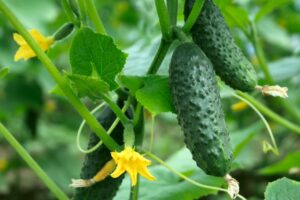
Cucumbers are a very rewarding plant to grow and harvest right in your backyard garden. Whether you have a small backyard, balcony, or patio, you can grow a ton of cucumbers wherever you are. This guide will walk you through everything you need to know on how to grow cucumbers to get a huge harvest.
How to Grow Cucumbers For a Huge Harvest
You can definitely grow cucumbers in raised beds and in-ground, but I prefer growing them in containers. I always grow them in containers and grow bags and I get a great harvest.
It takes a little bit of skill and patience to master, but after that, you get amazing cucumbers without using so much space.
But raised beds and in-ground work very well also.
And once you’ve tasted an organic cucumber straight from your garden, you’ll never go back!
That being said, let’s get right into how to grow cucumbers for a huge harvest.
Products:
Save 10% on your first Burpee seed order using code BURPEE10
Burpee cucumber seed varieties
Choosing the Right Cucumber Variety
It can be difficult to choose the right cucumber variety, especially with all the complicated words like “parthenocarpic.” Like what does that even mean?
So we’ll cover all the cucumber varieties so you know exactly which one to choose.
Most varieties are split into two categories:
- Vining Cucumbers: Vining cucumbers are cucumber varieties that produce long vines, typically over 6-7 feet long. They require a trellis to support the weight of the plants. Usually these ones are harder to grow in containers, simply because the plants are so large, but I have done it before.
- Bush Cucumbers: These varieties are unlike vining cucumbers in the sense that they only grow to a couple feet tall, or a bush. They don’t produce long vines and don’t need an extensive trellis to support the weight of the plant. These varieties are especially suited to container growing.
Within these 2 categories, there are varieties that have special features:
- Parthenocarpic: These cucumber varieties are self-fertile, meaning they don’t need the pollen from the male flower to pollinate the female flower. They are also known as virgin cucumbers. These are especially good if you’re only growing a couple of cucumber plants, as there won’t be enough flowers to properly pollinate too many plants.
- Gynoecious: These varieties are also known as “all female,” meaning they have all or mostly female flowers. Of course this also means that they are self-fertile, meaning they don’t need male flowers to set fruit. So you’ll get more cucumbers with less effort with gynoecious varieties.
If you’re just starting out with growing cucumbers and all of this seems very confusing, don’t worry, here are a few perfect varieties for beginners:
- Merlin: This variety is gynoecious (all female flowers), meaning they are self-fertile and don’t require pollination. They are also a vining variety, growing to 5-6 feet tall.
- Bush Champion: This bush cucumber variety is very resistant to cucumber mosaic virus and produces heavy yields of 8-12 inch fruits.
- Picklebush: A new variety I’m growing this year, Picklebush is a bush cucumber producing small cukes for pickling. It is also resistant to powdery mildew and mosaic virus.
When to Grow Cucumbers
Cucumbers are a warm-season fruiting crop. This means they need to be grown when it is very warm outside.
They are very cold-sensitive and can’t tolerate it too well. Temperatures below 13°C (55°F) can cause damage to the plants and frost will kill them right away.
So make sure to plant your cucumbers well after your last frost date. In my garden, I usually plant them about 2 weeks after my last frost date, which ensures that it’s warm enough.
They will grow throughout the summer and die off by time fall comes.
Sunlight Conditions for Cucumbers
Any flowering and fruiting crop needs a lot of sunlight. Aim for at least 6-8 hours of direct sunlight per day.
But just remember that the more light they get, the more cucumbers you’ll get.
If you’re growing cucumbers in containers, then you can move them around during the day to follow the sunlight.
Will Cucumbers Grow in Shade?
The only time you might have to give cucumber plants some shade is when it gets really really hot. If it gets really hot in the middle of the summer, then you’ll notice your plants will start to struggle.
The leaves are going to turn yellow and some will burn and become crispy.
So you can provide them with some shade at this point using a shade cloth. Cover them in the middle of the day, around 12pm-3pm. This is when it gets the hottest.
But at any other time during the growing season, they shouldn’t be covered with shade cloth at any time.
Preparing the Soil for Growing Cucumbers
If you’re growing in-ground, then there is not too much preparation needed. Just add a bunch of well-rotted compost or manure.
Cucumber plants need lots of organic matter, so using at least 40-50% compost is ideal for growing cucumbers.
If your soil is particularly clay-heavy, then you should amend it. One of my favourite amendments for clay soil other than compost is perlite.
Perlite helps to prevent compaction and aerates your soil. This helps cucumbers as they can be prone to water-related diseases.
If your soil is very loose or sandy, then you just need to add some compost. Compost fixes most soil-related problems in the vegetable garden.
For raised garden beds, just make sure you’re using a well-draining mix and add lots of compost again.
Starting Cucumber Seeds Indoors
I always prefer to start my cucumber seeds indoors. This gives them a head start and protects them from pests early in the season.
Typically, I start them about 3-4 weeks before I transplant them outside.
So my last frost date here is around May 15. So if I’m planting them outside 2 weeks after my last frost date, then I have to start them indoors around the beginning of May.
By the time the plants grow inside for 4 weeks, it will be 2 weeks past my last frost date, meaning I can safely transplant them outside.
Some gardeners like to soak their seeds in a cup of water overnight, but I’m not convinced this does anything.
The reasoning is that it allows enough water to penetrate the thick seed coating, leading to quicker germination. But if you just keep the soil moist, then you shouldn’t have a problem with this.
I also like to use a heat mat for cucumber seeds. This gives them the warm temperatures that they need to germinate.
Once the seedlings sprout, you can remove the heat mat and place them under grow lights. If you don’t have grow lights, then you can place them by a window that gets direct sunlight.
Keep the young seedlings well-watered and make sure to fertilize them every week with a liquid organic fertilizer, like this organic fish emulsion.
Transplanting Cucumber Seedlings
Once your seedlings are large enough, it’s been about 4 weeks, and it’s warm enough outside, then it’s time to transplant them.
A lot of gardeners say that you have to space cucumber plants 12 inches apart. But let’s be honest, nobody’s doing that.
We need to save space in our gardens, so space those plants about 8-10 inches apart. If you care for them correctly, then this shouldn’t be a problem.
Similar to tomatoes, cucumber plants can actually grow roots along their stem. So when you’re planting them, you can actually plant them deeper than the original soil level in their seedling cells.
Just make sure to remove the lower leaves if they’re touching the ground and plant them as deep as you can. This helps the plant create a stronger root system and anchor itself in the ground.
Can You Direct-Sow Cucumber Seeds?
You definitely can direct-sow cucumber seeds, but I don’t prefer it.
You’ll have to wait until the soil temperatures are warm enough or else the seeds won’t germinate. So planting after your last frost date is important.
That’s the problem though, instead of having perfect seedlings to transplant out after the frost date, you still have to sow your seeds.
The only benefits I see with direct-sowing cucumbers is that they won’t experience transplant shock and it’s a little bit easier.
But other than that, I would never direct-sow my cucumber seeds, just start them indoors.
Watering Cucumbers
Cucumber plants are very large, with large leaves, long stems, and juicy fruits. This means they need lots of water to stay happy.
Keep the soil consistently moist and don’t let it dry out for long periods of time. When it gets really hot, you might have to water your cucumbers once or twice a day in containers.
If you don’t give them enough water, then you’ll start to see dry leaves and the fruits will be bitter.
However, many times during the summer, cucumber plants will wilt. Of course, this happens when the plant is too hot.
But we shouldn’t water our cucumbers right when we see a little wilting.
Wait until the sun passes in the evening and look if the leaves on your cucumbers are still wilting. If they are still wilted, then you need to water them. If they’re propped back up again, then they don’t need any water.
Wilting in cucumber plants is a natural response that helps the plants conserve water during the hottest parts of the day. If they didn’t wilt, they would need even more water.
Fertilizing Cucumbers
I’ve noticed that the best fertilizer to use when transplanting cucumbers is a mixture of blood meal and bone meal. This provides enough nitrogen and phosphorus to produce lots of leaves and roots.
Once they grow at least a couple of feet, switch to a fertilizer lower in phosphorus and higher in potassium, but still with some nitrogen.
I also think it’s easier to apply liquid or water-soluble fertilizers during the growing season, but you can use granular fertilizers as well.
This organic water-soluble tomato + vegetable fertilizer has an NPK ratio of 6-2-3, which is perfect for cucumbers.
For cucumbers growing in-ground and in raised beds, you can use this fertilizer every 2 weeks. For container plants, fertilize them every time you water to give them the kick they need.
There’s not a lot of space in containers, so it’s important to fertilize them often.
How to Grow Cucumbers in Containers
Growing cucumbers in containers can be difficult at first, especially when considering their water and fertilizer needs.
Choosing the Right Container
That’s why it’s important to select the right container. Use a container that’s at least 7 gallons for vining cucumbers and 5 gallons for bush cucumbers.
But for the best results, a 10 gallon container would probably be the best.
This gives the plants enough room for the roots to get water and nutrients.
I like using grow bags, but any container will work.
Preparing Your Container Soil
For a 7 or 10 gallon grow bag, it might be expensive to fill the entire thing with high-quality soil. That’s why I like to do a little hugelkultur garden in all my containers.
Fill the bottom quarter or third of the container with organic matter, like grass clippings, leaves, food scraps, or anything else that will break down quickly.
Then fill the rest of it with your soil. Use at least 50% compost in the soil mix. Cucumbers need lots of organic matter, especially in containers.
And to accommodate their moisture requirements, I also like to add coco coir. Coco coir holds onto water, which means you won’t have to water your cucumbers as often.
Watering Container Cucumbers
Speaking about watering, even with all the soil amendments, you’ll still have to water your container cucumber plants a lot. Especially during the heat of the summer, you might have to water them twice a day.
So the best way to do it is to fill a shallow container with water and put all of your containers inside the container. They’ll soak up the water from the bottom and the soil will stay moist for longer.
Every time you have to water, just move all the containers back into the shallow container and fill it up with water.
Fertilizing Container Cucumbers
For fertilizing, make sure you fertilize your container cucumber plants every time you water. Just add some liquid fertilizer into the water before putting all your containers in.
Another good amendment for container plants is compost tea. Because containers are small and don’t have much life in them, compost tea can add lots of beneficial microbes to help break down organic matter.
Don’t use compost tea as a replacement for fertilizer, use it with fertilizer to add soil microorganisms.
Mulching Cucumber Plants
Because cucumbers need so much water, adding a nice thick layer of mulch can help to conserve water.
My favourite mulch is shredded leaves, mainly because they’re free here. But you can use straw, grass clippings, or anything else that’s available.
For containers, raised beds, and in-ground, mulching helps to retain moisture, reflect sunlight, and help the soil cool down.
When applying mulch, make sure to leave about an inch of space around the stems of the cucumber plants. If mulch gets too close and starts to touch the stem, it might start to rot and the plants will die.
Pruning Cucumbers
The way you prune cucumbers depends on which variety you’re growing. Bushing and vining cucumbers are pruned differently, so here’s how to do it.
The first thing to know is the cucumber growth habit. Cucumbers produce one main stem with leaf nodes interspaced across it.
At every leaf node, there are 4 things growing: a leaf, a flower, a tendril, and a sucker.
The leaf is for photosynthesis, the flower is for fruit production, the tendril is to grab onto the trellis, and the sucker produces a new growing stem. This is important to know first.
Pruning Vining Cucumbers
There are 3 different methods for pruning vining cucumbers:
- Single-Stem Pruning: This method involves removing all of the suckers that grow at the leaf nodes. You leave just the main stem to grow and produce fruit. This makes it easier to train and grow on a trellis. I’m not convinced that this method is the best one, but many people use it for their cucumbers.
- Leave Some Suckers: I use this pruning method, which involves leaving 3-4 suckers on the plant. Eventually, these suckers will grow large enough to be new growing stems and they will produce fruit. This basically triples or quadruples your harvest because there will be 3-4 new main growing stems.
- Wild Pruning: This method is when you don’t prune at all. No pruning, no training, nothing. Just let them run wild. Some gardeners do this, but it probably won’t work for you. The plants will get overcrowded, there won’t be any airflow, and there will be so much pest and disease damage.
Whichever pruning method you’re using, make sure to remove the lower leaves of your cucumber plants. The leaves that touch the soil can increase the risk of pest and disease damage. So by removing these, you’ll have healthier plants.
If you want an easy pruning method, choose single-stem pruning. But my favourite is to leave 3-4 suckers on the plants.
Pruning Bush Cucumbers
Bush cucumbers are a little bit different in their growth pattern; they don’t grow nearly as tall as vining cucumbers. Typically, they’ll only be about 2-3 feet tall.
So if you go with single-stem pruning, you’ll only have 2-3 feet of fruit production, which is basically nothing.
Instead, you really don’t have to do any pruning, except to remove the lower leaves touching the ground.
Let your bush cucumbers grow without pruning, allowing all the suckers to grow into main stems.
How to Grow Cucumbers on a Trellis
You don’t have to grow cucumbers on a trellis. You can let them sprawl across the ground and they will produce fruit.
But the problem with that is that it increases the risk of pest and disease damage, and it can lead to small and misshapen fruit.
Trellises allow cucumbers to grow vertically, which keeps the leaves off the ground. Additionally, gravity will allow the fruits to hang, producing straighter cucumbers.
You can learn more about this in my guide on how to make a DIY cucumber trellis.
Basically, you want a trellis large enough to support the long vines and heavy fruits of your plants. You can use a tipi, A-frame, cattle panel, chicken wire, or whatever else you have.
Pollinating Cucumbers
Unless you’re growing a parthenocarpic or gynoecious variety, then the flowers need to be pollinated to actually produce fruit.
Male and Female Flowers
The first thing to know is the difference between male and female flowers. No, it’s not male and female in the human sense, it’s just a way to differentiate between the different flowers.
The female flowers have a small fruit behind them, while the male flowers don’t have a fruit behind it.
So the pollen from the male flower needs to touch the pollen in the female flower.
Using Pollinators
Normally, pollinators (like bees and butterflies) would do the pollen transfer for you. But we don’t always have a ton of bees flying around our gardens, especially if you’re only growing vegetables.
So the first thing to do is to plant lots of flowers in your garden. Interplant annual flowers with your cucumbers to increase the amount of pollinators around your cucumbers.
Some of my favourite flowers are poppies, alyssum, and calendula.
The more bees and stuff around your plants, the higher the likelihood that they’ll pollinate the cucumber flowers.
Hand-Pollinating Cucumber Flowers
But even if you have a lot of bees flying around, they still might not pollinate the flowers.
So the only way to ensure that fruits set on your plants is to pollinate the flowers yourself.
Once you find the male flowers, then you have to transfer the pollen to the female flower. Some people like to use a small paintbrush to collect the pollen, but that never really worked for me.
Instead, take one male flower off the plant and peel off all the outer petals, leaving the bundle of pollen in the middle. Then rub the male pollen into the female flower.
Check out my video on hand-pollinating cucumbers to see me actually doing it.
Harvesting Cucumbers
Cucumbers are ready to harvest when they reach their full size and colour. The cucumber should be dark green and should not have any light spots. It should also be about as long as the variety says. If it says 5-6 inches long for a ripe cucumber, then they should be 5-6 inches long.
Harvesting them early gives you perfectly ripe and sweet fruits. And make sure to pick the fruits often, as this encourages more fruits to grow and ripen.
If they start turning a lighter green, you can still harvest them, but they might be more bitter. At this point, you can peel them and remove the seeds and they’ll be less bitter.
If the fruits start to turn yellow, then you have waited way too long. They are inedible at this point and the seeds are fully mature, ready to be planted next year.
But the problem with letting the fruits ripen this long is that it signals to the plant that its life is over. If the fruit ripens, then it means that the seeds are ready, which tells the plant that it doesn’t need to produce any more fruit.
So make sure to harvest the fruits when they reach their ripe size and colour.
During the summer, you might have to check your cucumber plants every day for ripe fruits because they produce a lot.
Common Problems When Growing Cucumbers
For first-time cucumber growers, there are some problems that you might encounter that could reduce your harvest:
- Yellowing Leaves: Yellowing cucumber leaves is especially common in container-grown plants. It’s usually caused by overwatering or nutrient deficiency. So make sure that you’re watering just enough and fertilizing your container cucumbers every time you water with a liquid fertilizer.
- Bitter Fruits: Your cucumbers will be bitter if you let the soil dry out too much, or if you leave them on the plant for too long. Make sure to water them thoroughly, especially when it gets really hot. Also, don’t let them get over ripe on the plant. Pick cucumbers regularly when they are young and dark green.
Cucumber Pests and Diseases
| Pest / Disease | Solution |
| Aphids | Aphids appear underneath the leaves of cucumber plants. Spray them with a castile soap solution to kill them. |
| Cucumber beetles | These yellow and black striped beetles eat your plants and spread diseases. Prevent them by covering your plants with a floating row cover early in their lives. Once the plants grow larger, cucumber beetles usually won’t find them attractive. |
| Powdery mildew | You’ll see the white powdery fungus on the top and bottom of the leaves. Avoid getting the leaves wet and splashing dirt when watering. |
| Downy mildew | Similar to powdery mildew except yellow. Again, avoid getting the leaves wet and splashing the leaves with dirt when you water. |
| Cucumber mosaic virus | Mosaic virus is spread by aphids. So to get rid of it, kill the aphids first with the same castile soap solution. |
| Bacterial wilt | Bacterial wilt is spread by cucumber beetles, so make sure to cover your plants early on in their life. |
Frequently Asked Questions
Can you grow cucumbers in 5 gallon buckets?
Cucumbers are great plants to grow in 5 gallon buckets. The depth of the buckets is perfect to accommodate cucumber roots. Make sure to keep up with watering, pruning, and fertilizing.
Can you grow cucumbers on a fence?
For chain link fences, cucumbers will attach themselves to the fence, meaning you don’t need a separate trellis. For wooden fences, they won’t naturally attach themselves, so you’ll have to build some sort of trellis to put on the fence.
Can I grow 2 cucumbers in a pot?
If you have a container that is 15 gallons or larger, then you can grow up to 2 cucumber plants in it. For any smaller container, 2 plants is too many to grow in one pot.
Can you grow cucumbers from store-bought cucumbers?
Most cucumbers from the grocery store are seedless, meaning you won’t be able to plant them. But even for the seeded varieties, they’re harvested when the fruits are still young, meaning the seeds aren’t mature. So if you plant them, none of the seeds will germinate.
Even More Gardening Ideas
Here are a few more posts to get the ball rolling in your garden!
- 9 Warm-Season Vegetables to Grow in Containers
- Planting Bare Root Raspberries in Spring
- 10 Climbing Cucumbers Varieties to Grow on a Trellis
If you liked this article, make sure to share it with your friends and family members who are also looking to sharpen their gardening skills. Also, consider signing up for our email newsletter; don’t worry, we won’t send you spam, just fresh gardening ideas every week!
If you want to learn more about vegetable gardening, make sure to check out what I’m doing on Facebook, YouTube, and Pinterest.
Pin this post for later:

Leave a Reply